


Brake Safety Week: Put the Brakes On Out-of-Service Violations
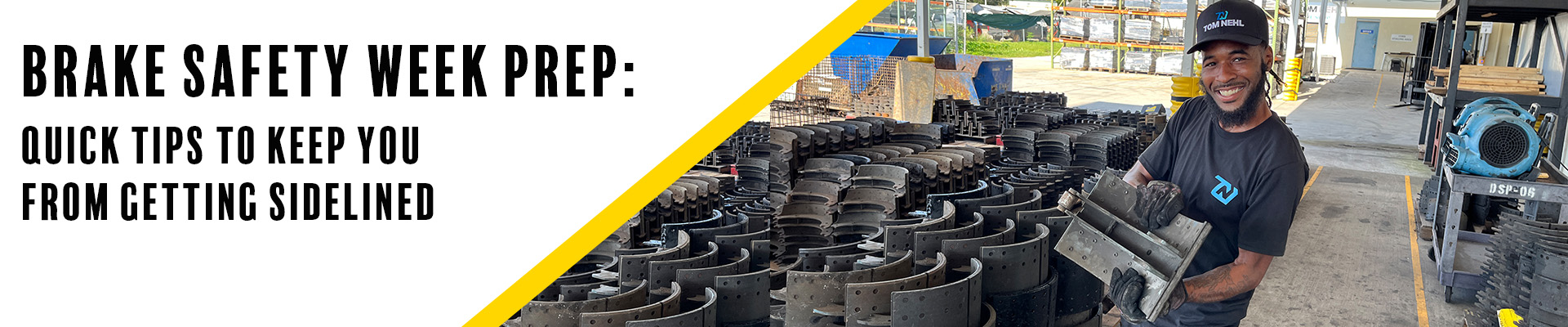
With CVSA Brake Week just around the corner, the Tom Nehl Team wants you to be ready for anything! Here are some quick tips to make sure you don’t get sidelined by a brake inspection.
- A little preparation now can save you a big headache later
Taking even a few minutes now to do your own brake inspection in advance of Brake Safety Week could make the difference between rolling right along and getting stopped. Look closely at your brake drums and rotors for wear and tear. Anything that looks damaged should be replaced. Better safe than sorry! - Check your air brakes and look for leaks
Sometimes you can hear an air leak and locate it quickly, but it’s not always so easy due to engine noise and other factors. When you’re hunting down an air leak, a good way to find it is with soapy water. If you think you might have a leak in a compressor braided line, where air can seep out and it’s hard to detect, get a soapy solution in a spray bottle and spray down the line. If you have an air leak, it will form bubbles so you can easily spot your leak. - Don’t slack on inspecting your slack adjusters!
Misadjusted brakes are a top item for Brake Safety Week violations. Don’t let this one slow you down! If your slack is a type with a rubber boot, keep an eye on it. When the boot is torn, it’s time to replace it. It’s also important to use the template that comes with your slack adjuster when you set it up. Those angles are crucial. You need to set it up properly every time. Don't guess! - “I’ve got plenty of lining left” are famous last words
Take a closer look at the go/no-go area, which all drive or trailer brake shoes are now required to have. There's a line, a V cut, or a notch, depending on the type of shoe to indicate the no-go area. When you get to that point, the DOT considers that shoe to be worn out. Don’t cut it too close! Check your brake lining thickness on all wheels. Here are the DOT’s official requirements.
Disc brakes are now more prevalent than ever, but they are tricker to assess on your own. The Tom Nehl Team would be happy to help you with the guideless or check it for you.
- A sixteenth of an inch goes a long way
99% of drums on trucks today are 16 ½ inch drums. When they wear down to 16 and 5/8, the DOT considers them to be worn out. That is only one sixteenth of an inch per side! It’s tempting to look at that drum and think, oh it's not bad, but just one sixteenth of an inch can get your sidelined, so keep a close eye on those drums! - Get your paperwork in order
Having good documentation of your brake inspections, repairs, and parts replacements can make your inspection a little bit less of a headache. It also shows the inspector that you are organized and on top of needed maintenance.
As always, the Tom Nehl Team is here to help make sure you pass your inspection with flying colors. Our knowledgeable parts team can answer your trickiest brake questions and help you with any last-minute replacements. Our expert service team can get your brakes in tip-top shape and advise on any issue you need help with.
This brake inspection checklist from CVSA may also be helpful.
Contact Us
Follow Us


